01 — Ecology
Riverbed habitat for fish nurseries, invertebrates, and freshwater molluscs. The bed is not inert. It is a living floor. Dredging it is clear-cutting underwater.
INVESTIGATION
The River Eating is an ongoing investigation in fieldwork, tools, and film into the quietest commodity in the world, and the rivers disappearing into it. It begins with one river in southern Nigeria.
I · Did you know?
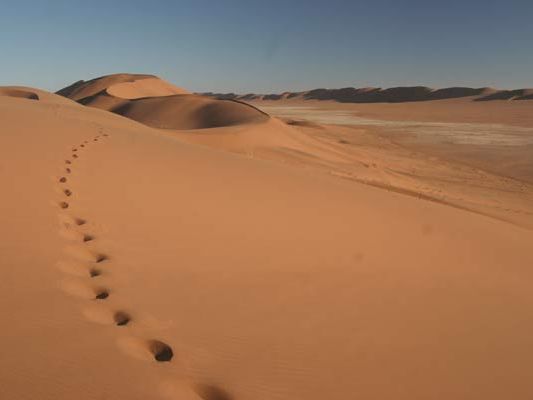
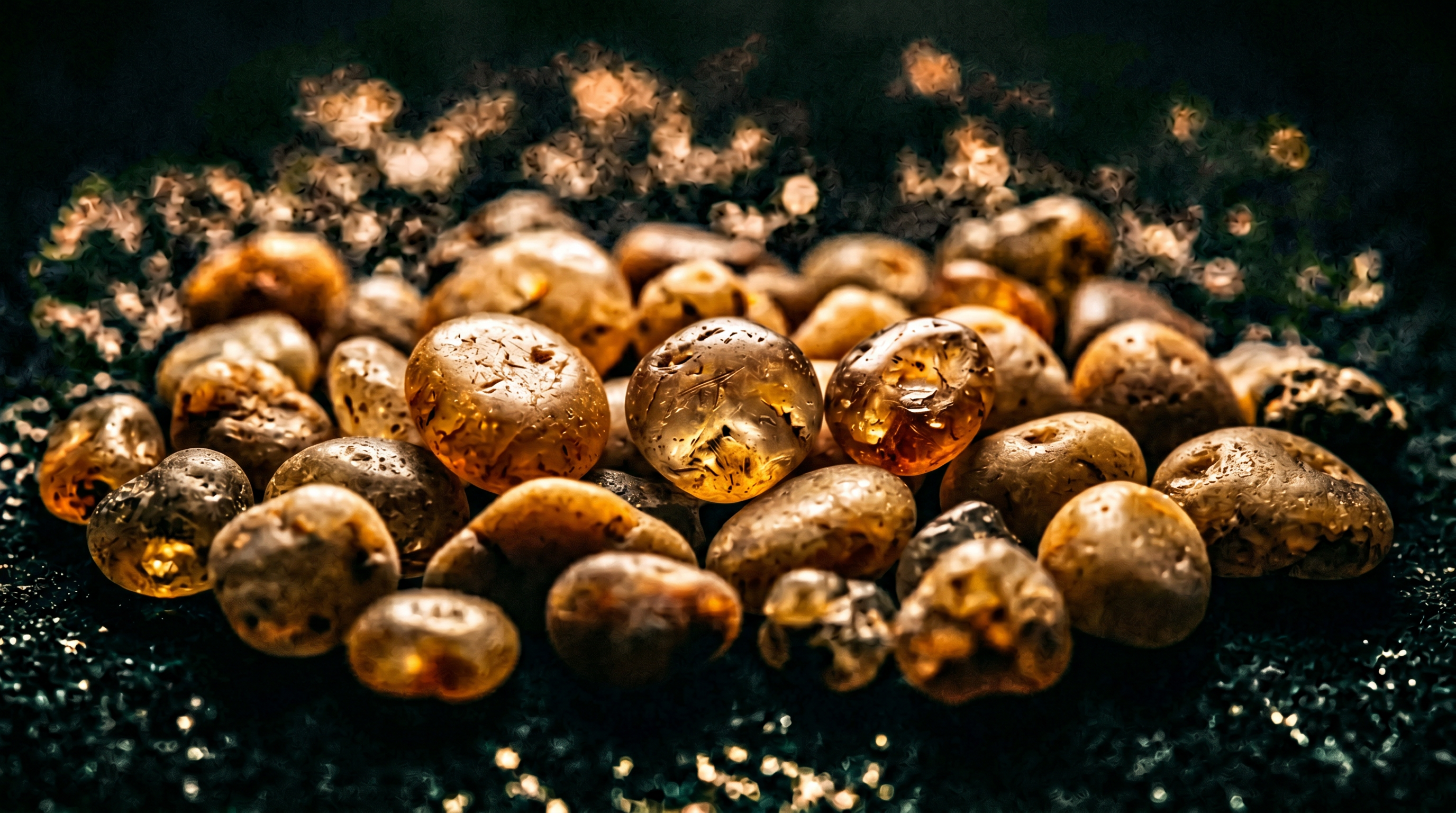
Wind-polished grains are too round and smooth to interlock. The Sahara is useless for concrete. The world's beaches and rivers are not.
Roughly 50 billion tonnes of sand and gravel, the largest solid material flow on the planet, larger than all the fossil fuels we burn combined.
Reporters, officials, and villagers have been murdered for documenting illegal sand extraction, from India to Mexico to the Gambia. This is not a fringe commodity. It is invisible on purpose.
The scale
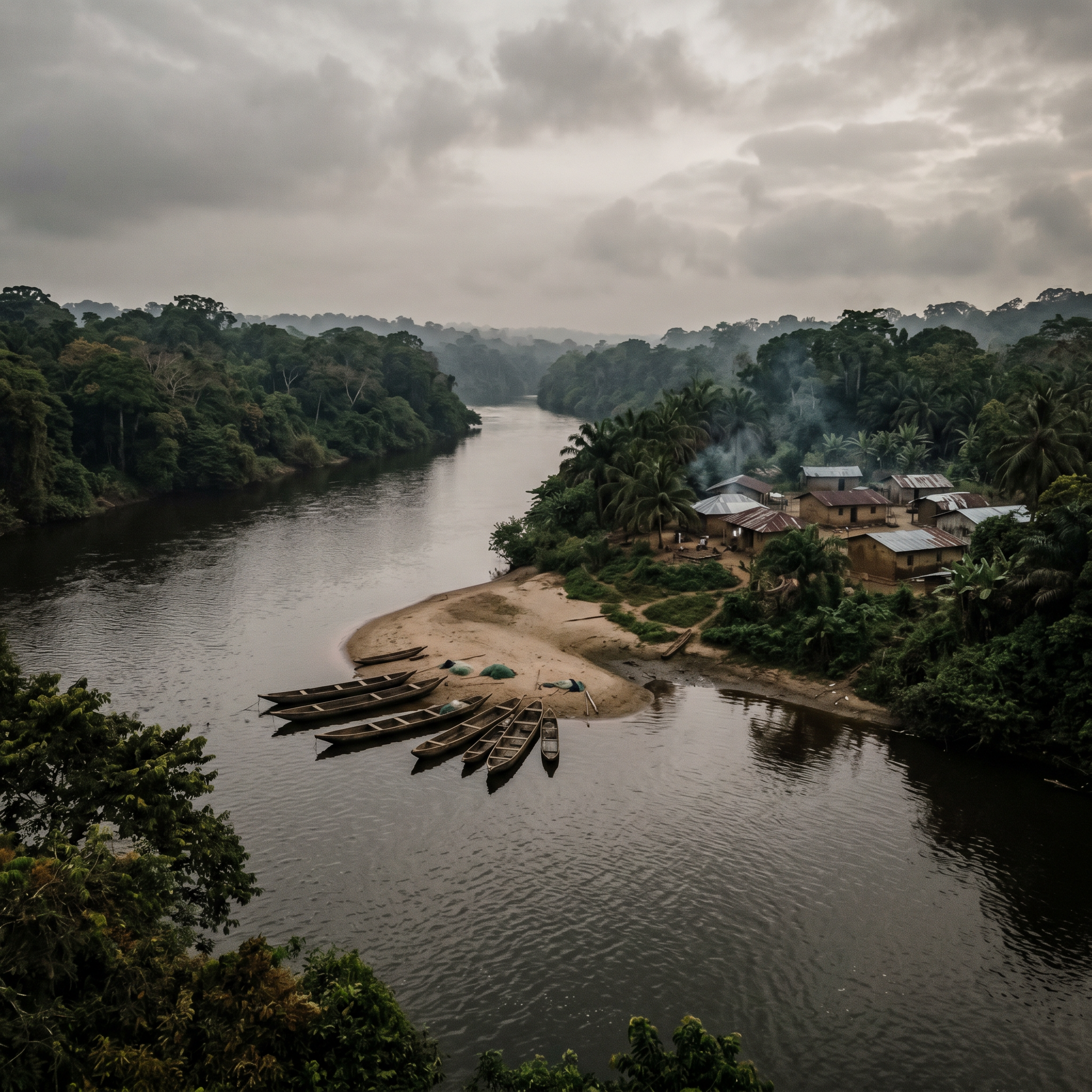
I'm from Ebonyi State, Nigeria. Our river has drowned people I knew. Every year, it takes a few more.
What you need to understand is that it didn't use to. The river was shallow enough that children crossed at dry season. Fishermen knew the bars where their poles would touch bottom. Elders could name the pools.
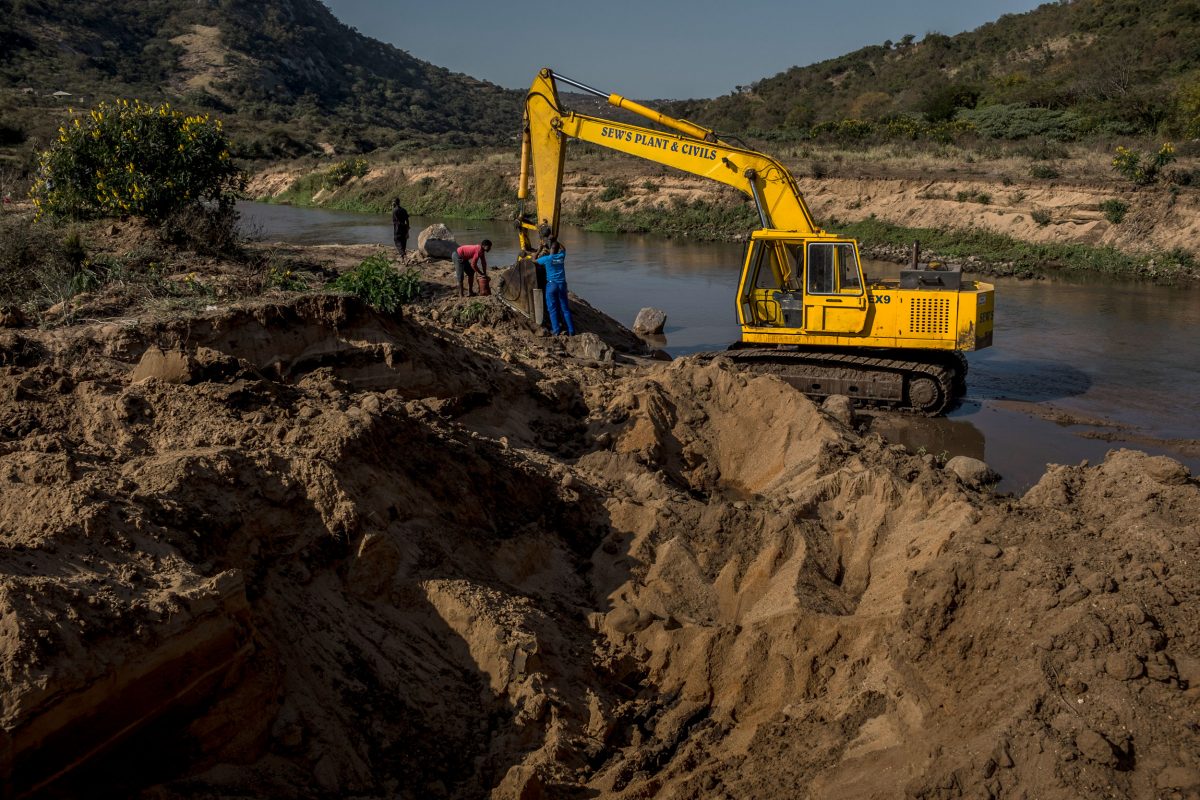
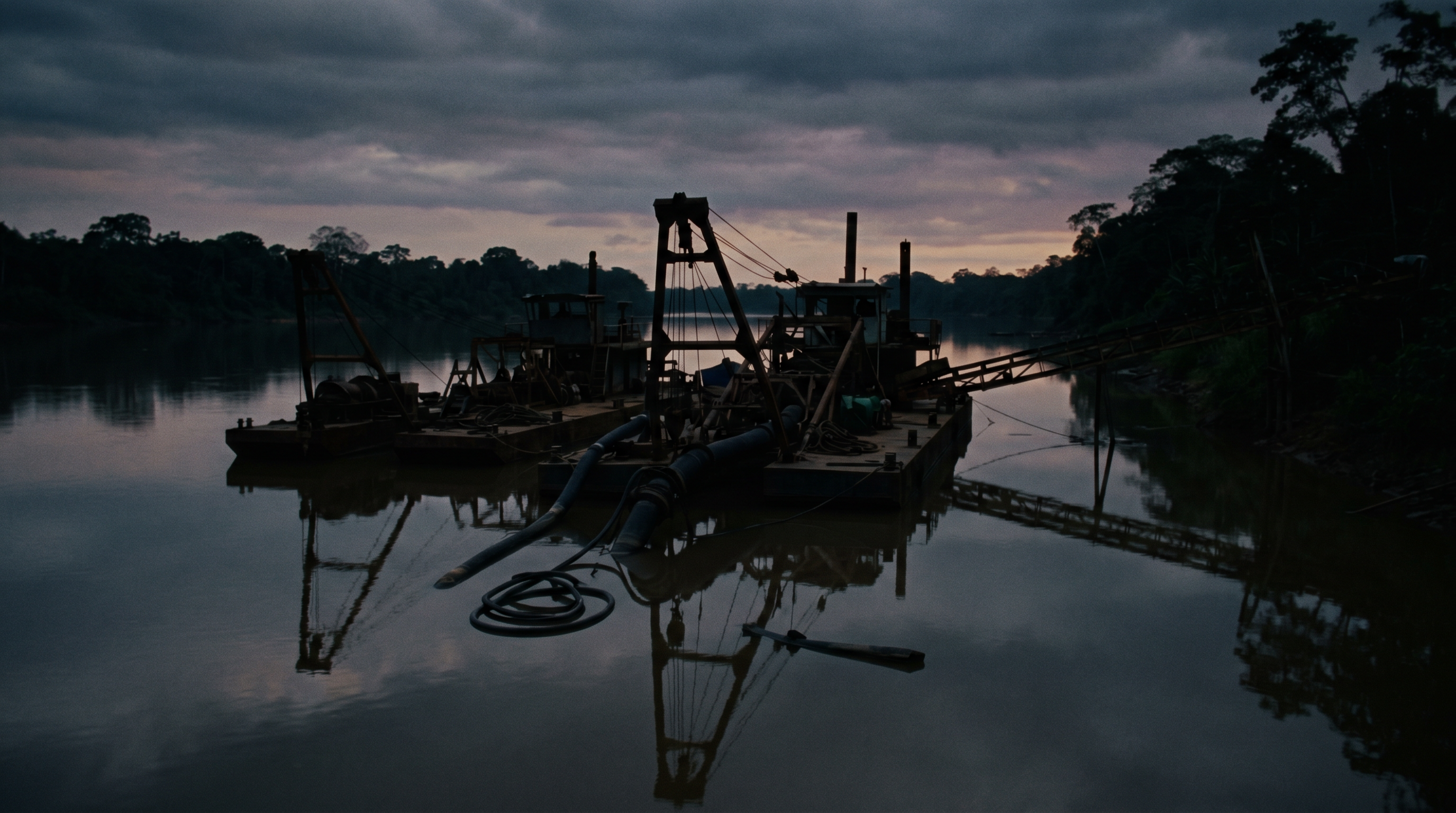
Then the excavators came. Not as violence, as opportunity. The community lobbied for the quarry. More trucks meant more work. More work meant school fees, new roofs, generators that held through the night. No one explained to them what happens to a river when you take its bed.
I have been on the floor of that river. I have stood on the bed of Cross River in dry season and watched the pit walls of a sand pit tower over my head, pits dug below the natural bed, then abandoned. The water finds them. The current accelerates into them. The bed deepens. The next rainy season, the river is a metre lower and two metres deeper, and the children who always crossed here are suddenly drowning here.
The community did not ask to lose the river. They asked for a quarry. The difference between those two things is what this project is about.
This is not only a story about Cross River. There is a version of it in the Mekong. In the Ganges. In the Nile delta. In southern California. The pattern is always the same: a local commodity is priced as if it were infinite, a community is invited to sell it, and then the river is gone and the people who sold it are the ones who drown.
What we lose when the river goes
Riverbed habitat for fish nurseries, invertebrates, and freshwater molluscs. The bed is not inert. It is a living floor. Dredging it is clear-cutting underwater.
Drownings from steepened banks. Collapsing bridges and water intakes. Displacement when wells run dry. The violence of the commodity is mostly hidden, until a body is found.
Sand is an aquifer filter. A deepened, coarsened river pulls the water table down with it. The well that worked in 2015 is dry in 2026.
Every grain taken from the river is a grain that never reaches the coast. Lagos, Calabar, the Niger Delta, the deltas of the world are built and rebuilt by rivers. Starve the river of sand, and the sea starts taking the city.
The next twenty-five years
Global construction sand demand exceeds sustainable replenishment by a factor of two. Regional shortages become permanent. Informal extraction triples.
Jakarta, Lagos, Ho Chi Minh City, Alexandria, all are starved of riverine sediment. Rising seas meet sinking ground. The first neighbourhoods are abandoned.
My village's crossing is no longer a crossing. Drownings in riverine communities have doubled. Local fishery collapses.
High-purity silica is bottlenecked not by geology but by extraction limits. The twenty-first century's defining technologies, chips, batteries, glass, are rationed by the commodity no one named.
III · The work
Sand is invisible because nothing forces it into view. These three tools exist to force it, slowly, publicly, in the open. None of them have to be finished. All of them have to be started.
A benchtop sand-fracturing prototype.
A small acoustic/kinetic device that takes round desert grains and tries to give them the angularity river sand has naturally. If it works at table-top scale, a version of it belongs in every sand-starved economy. Build logs, bill of materials, and CAD live in an open repository from the first weld.
A public grain-morphology dataset.
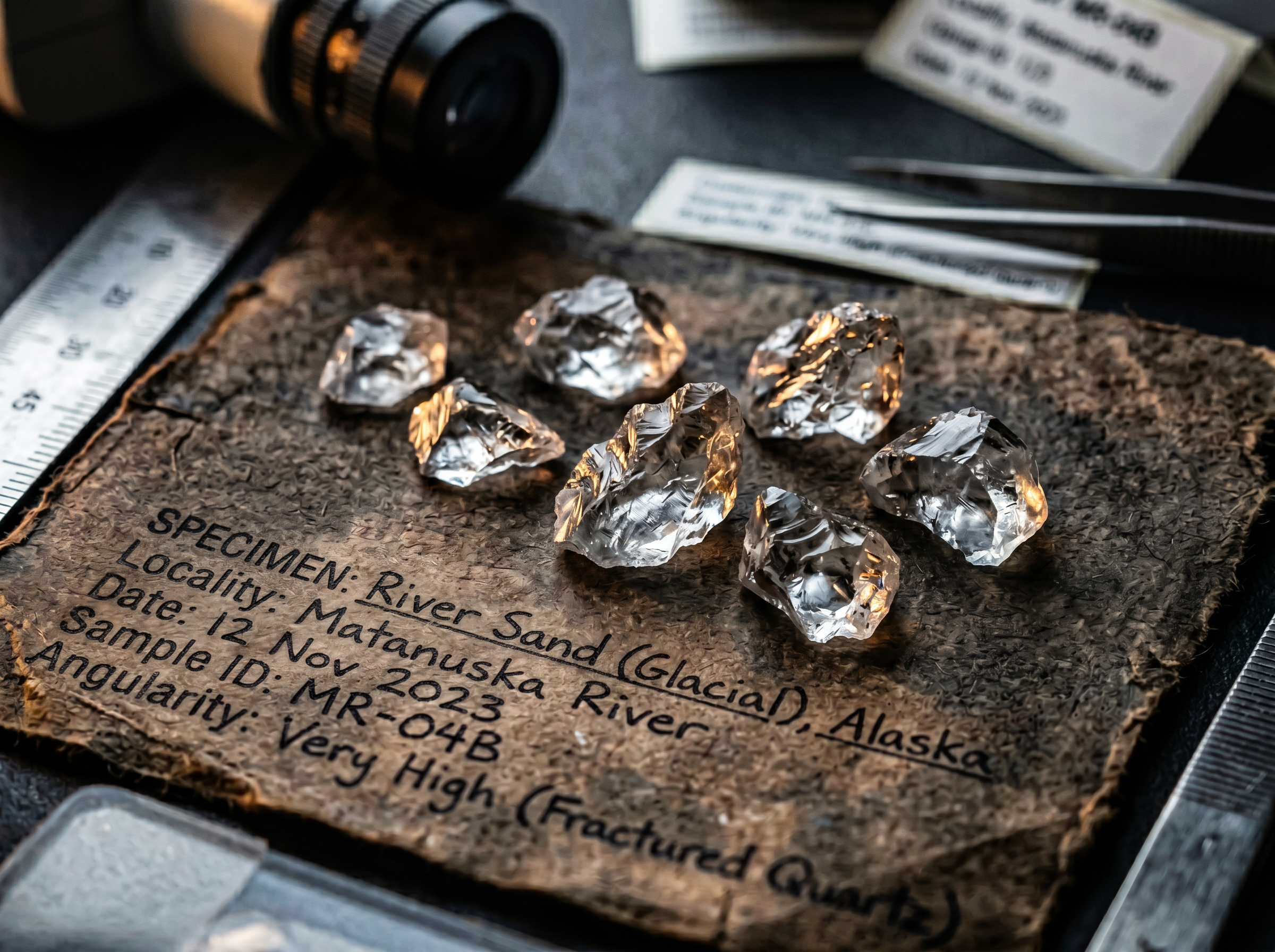
Desert, river, and marine sand specimens, imaged under microscope with standardised geometry metrics, roundness, sphericity, angularity. Released CC-BY, so that any researcher, student, or policy team anywhere in the world can ask a question nobody here thought to ask.
"The River That Is Eating My Village."
A short documentary, filmed in Cross River, released free to watch. Not a pitch and not a PSA. A field record, the community, the bed, the drownings, the quarry request, the science, the quiet arithmetic of what we have lost. Subtitled in English, Efik, and Igbo.
Why this site exists
Nobody asked me to do this. No institution, no funder, no foundation is paying for it today. It exists because I'm from a place where the river has drowned people I knew, and because the commodity doing the drowning is hiding in plain sight.
The site will grow as the work does. Some months there will be a new field note. Some months there will be a broken prototype and a write-up of why it broke. Some months there will be silence, and then a film. If funding arrives, the work accelerates. If it doesn't, the work continues, slower, but in the same direction.
The goal is not to finish. The goal is to refuse to look away, in public, for as long as it takes.
Field notes
I will write in public as I go. Dispatches from Cross River, lab progress on the rig, specimen logs, drafts of the paper. The messy middle, not just the finished piece.
The first field entry, a return to the river, with cameras and calipers this time. What the pit walls look like from below.
UpcomingDraft bill of materials for the benchtop prototype. Why I'm starting with ultrasonics rather than ball-milling.
UpcomingA short primer on grain morphology, Wadell roundness, Krumbein, and why the shape of a grain is most of its behaviour in concrete.
UpcomingStay with it
One quiet email when a new dispatch goes up, from the river, the lab, or the desk. No newsletter. No marketing. Just the note.
Or just bookmark this page. New notes appear above as they're written.
Get involved
If any of what follows describes you, the site is for you — and there's a way to help. None of it requires money.
If your community is living through sand extraction, anywhere in the world — I want to hear from you. Voice note, email, photo, anything. Stories collected with consent may be included in the film, or published as field notes with your community credited.
Write me →If you have access to a microscope, a sampling site, or a curriculum on sedimentology, there is room to contribute to The Atlas. All data released under CC-BY, contributors named, methods open. Students welcome.
Collaborate →Press inquiries, documentary crews, podcast producers, sand is under-covered because it's undramatic until it's fatal. If you want footage, interviews, citations, or a source on the ground in Nigeria, I'm here.
Press & media →Grants, fellowships, institutional partnerships, a microscope, a camera, a plane ticket, any of it shortens the runway. The work continues either way; funding just lets it happen in months instead of years.
Open a conversation →
Who is doing this
I'm a geologist from Cross River State. I've stood on the bed of the river that drowned my community, and I am quietly, stubbornly, trying to understand what we can do about what's taking it.
I'm not an institution. I'm one person working with what's at hand — a notebook, a camera, a microscope when I can get to one, and a river I know by name. The work is slow. It is public. It is ongoing, with or without anyone's permission.
If you've read this far, you're already part of it. Thank you for staying with the silence long enough to hear what's inside it.
Contact → therivereating@gmail.com
Location → Cross River State, Nigeria
Status → In the field
"They asked for the quarry.
They didn't know they were asking for the river."